Design for Manufacturability (DFM) is a strategic approach that bridges the gap between product design and production. Rather than treating manufacturing as an afterthought, DFM integrates production considerations into the earliest stages of design, ensuring that products are not only innovative but also practical to build.
The principle is simple: by accounting for materials, manufacturing processes, and assembly methods during design, companies can avoid costly surprises down the line. The result? Fewer production headaches, lower costs, and products that reach market faster without sacrificing quality.
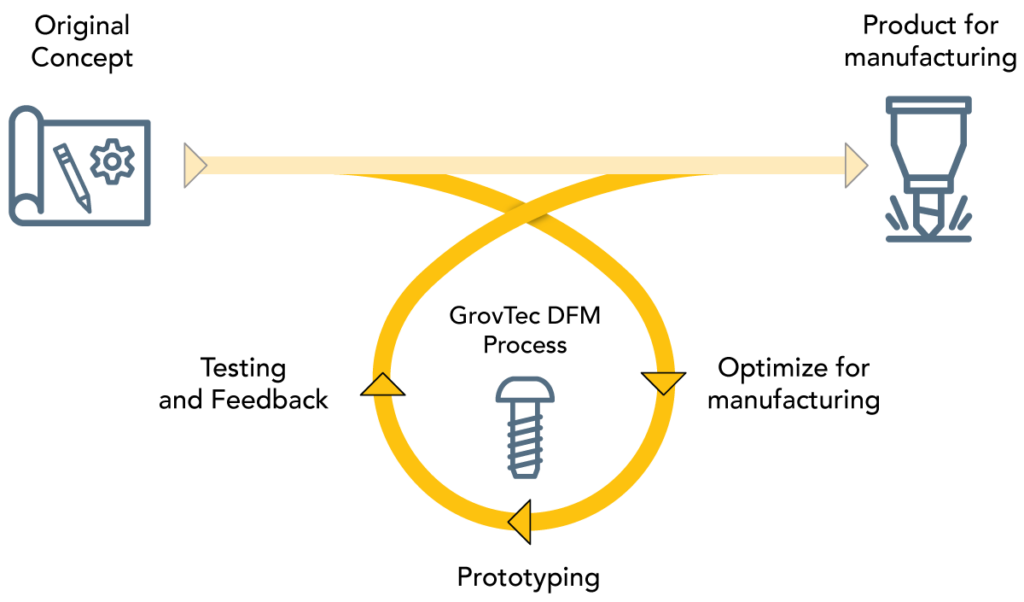
GrovTec’s dfm process
Early consideration of manufacturing processes involves several key principles. Simplifying product design and standardizing components help streamline production, while optimizing material usage ensures resources are used efficiently. Together, these efforts reduce assembly steps and create a more effective manufacturing workflow.
Why DFM Matters: Key Benefits
Implementing DFM principles delivers tangible advantages throughout the product lifecycle:
Few errors & high quality
By identifying manufacturing issues during design rather than on the factory floor, DFM helps teams catch problems early when they’re easiest and cheapest to fix. This proactive approach reduces defects, improving product quality.
Low cost & fast production
When products are designed with manufacturing in mind, they require fewer specialized tools, less complex assembly, and shorter production cycles. These efficiencies translate directly to reduced manufacturing costs and faster time-to-market.
Improved product reliability
DFM ensures that components are designed with appropriate tolerances, proper materials, and realistic assembly requirements. This attention to manufacturing realities results in products that are more durable and reliable throughout their lifespan.
How Long Does the DFM Process Take?
When DFM is incorporated from the initial design phase, it becomes a natural part of the workflow rather than a separate review process. For straightforward products with experienced design teams, DFM considerations might add minimal time to the development schedule. More complex products requiring specialized manufacturing processes may need several review cycles. However, time invested upfront in DFM can significantly reduce costly redesigns and production delays later int he process.
The bottom line? DFM isn’t just a best practice—it’s a competitive advantage for any manufacturer serious about delivering quality products efficiently and profitably.